Op zoek naar een eigen steady development team?
Contact us
Blog
April 14, 2026

You’ve launched a new software project. The kickoff goes well, the team understands what you want, and the first sprints run smoothly. And then, three months later, you hear that the lead developer has left for another company. Someone else takes over. You have to explain everything all over again. The momentum is gone.
This scenario is familiar to many organizations, and it’s one of the most underestimated risks when choosing a software partner. Not the technology, not the hourly rate, but the stability of the team working on your project.
Software development isn’t assembly-line work. A developer who’s been working on your platform for a year knows why certain choices were made. They understand the context behind decisions made months ago. They know the nooks and crannies of the codebase where the complexity lies, and they know what technical debt is still waiting to be addressed.
You don’t build that kind of knowledge during an onboarding interview. It resides in the minds of people who’ve been there for a while, and it disappears the moment those same people leave.
In practice, high staff turnover at a software partner means: more time spent on handoffs, more mistakes in the early stages of a new team member’s onboarding, less continuity in architectural decisions, and greater reliance on documentation that is never comprehensive enough.
In the Netherlands, the demand for skilled technical staff consistently outstrips the supply. Developers are in short supply, are well-paid, and have the luxury of changing jobs regularly. At many Dutch software companies, an annual turnover rate of twenty to thirty percent is not an exception but the norm.
This has direct consequences for you as a client. The higher the turnover at your partner’s company, the greater the chance that the team building your project will look very different a year from now than the team that started it.
A stable team works faster, makes fewer mistakes, and communicates better. These aren’t just empty claims but logical consequences of working with people who know each other, understand each other’s working styles, and aren’t constantly having to train new members.
In addition, there is the impact on quality. A developer who knows that in two years’ time he or she will still be responsible for the code being written today makes different choices than someone who already has one foot out the door. Ownership of code is closely linked to continuity within the team.
For clients, low turnover also means less reliance on documentation as the sole repository of knowledge. Documentation is always a supplement, never a full-fledged replacement for people who understand the context.






At Smartshore, low employee turnover isn’t a happy coincidence but the result of deliberate choices in how we run our business.
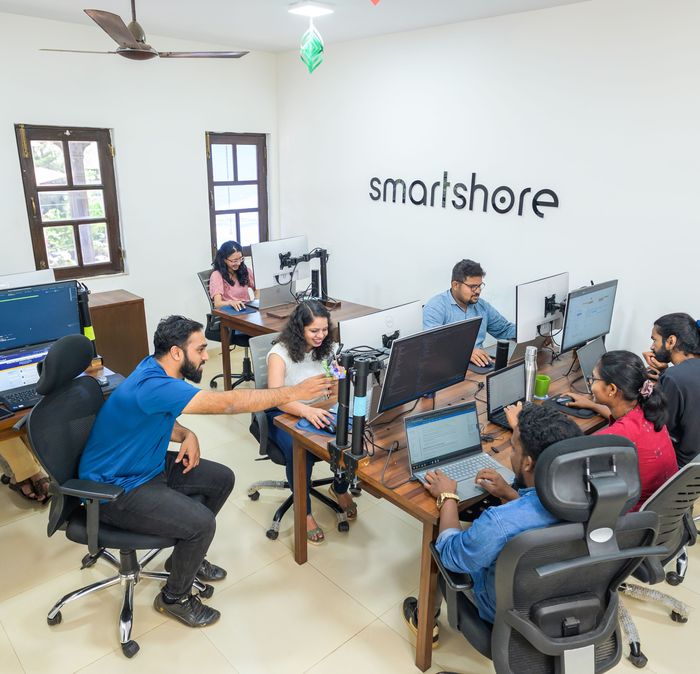
Our development teams in India are based in Ludhiana and Panaji, deliberately located in smaller cities where IT talent can work close to family and in a familiar environment. In major Indian tech hubs like Bangalore, turnover is structurally high because developers are constantly being poached by the next offer. We choose an environment where peace of mind and a sense of community are the norm, not the exception.
The results speak for themselves. In Smartshore’s first eight years, employee turnover in India was zero. It remains below five percent, while the industry average is over twenty percent.
The same principle applies to our Dutch teams: autonomy, trust, and job satisfaction as the foundation, not as a perk. People who enjoy their work and feel valued don’t leave.
How many questions do organizations actually ask about employee turnover when selecting a software partner? In our experience: very few. The focus is on technology, references, methodology, and price. Turnover is rarely discussed.
Yet it is one of the most direct predictors of how a partnership will develop. A partner with stable teams ensures better continuity, less rework, and greater long-term trust.
So just ask that question. How long do your developers typically stay with you? What does turnover look like in the team that would be working on my project? The answer says more than a nice list of references.
Contact us