Geluidshinderaanpak
How we transformed scientific knowledge into a scalable and accessible public knowledge service using a multi-agent AI architecture and Strapi as a headless CMS.

This pace isn’t achieved by working harder, but by fundamentally restructuring the process. Requirements are broken down into micro-stories lasting two to four hours, small enough to deliver and review on a daily basis. Refinement and review happen continuously rather than periodically. And a fully automated DevOps pipeline deploys to production multiple times a day, so that every completed micro-story becomes immediately visible.
AI accelerates the process wherever possible: when writing code, creating tests, and maintaining documentation. Not as a replacement for the team, but as an accelerator that complements the approach.
While traditional Scrum operates in two-week cycles, Hyper Agile Development moves ten times faster. That doesn’t mean working harder, but rather a process designed around smaller steps and faster feedback.
Requirements are broken down into small, concrete units of work. This makes progress visible on a daily basis and makes it easy to make adjustments, rather than waiting for a major delivery at the end of a long cycle.
Refinement and review are not fixed points in the sprint, but an ongoing process. A fully automated DevOps pipeline ensures that deployments to production occur multiple times a day.
AI accelerates coding, testing, and documentation wherever possible, complementing the team’s approach rather than replacing it. The result: feedback within hours instead of weeks, up to 30% higher velocity, and up to 30% lower costs thanks to the hybrid Dutch-Indian team.
For organizations that find traditional Scrum too slow to keep up with the pace demanded by the market. For clients who want feedback on what’s being built within hours, not weeks. And for anyone who wants noticeably higher velocity and lower costs, without compromising on quality or control over the process.


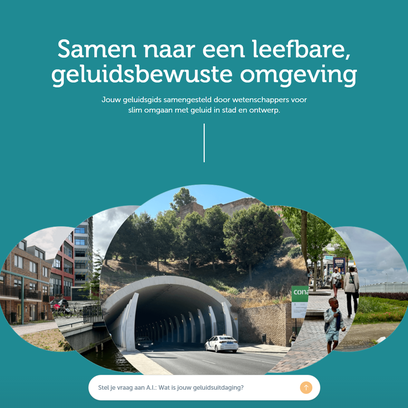
How we transformed scientific knowledge into a scalable and accessible public knowledge service using a multi-agent AI architecture and Strapi as a headless CMS.

Data governance engine, also known as Da·gon·gin, ensures the dgl implementation of the data governance framework of dgl.

The team develops the market-leading application for fleet management in The Netherlands.

For the Province of Zuid-Holland we regularly do new innovative web projects, often BI driven projects with lots of data visualizations. We also structurally supply front-end developers and designers to the province.

Together with Hallo, we realised and implemented the new digital strategy: a completely new digital customer experience that fits Hallo's growth.

The Smartshore Academy realized a scrum poker tool: Play! Fun to use for teams and a powerful tool for quick estimation. Scrum Poker is lightweight and can be used by any Agile team without subscription or commercial messages.
Contact us

