Want to learn more about Headless? We’d love to talk about it. Without the jargon.
Contact us
Blog
March 31, 2026
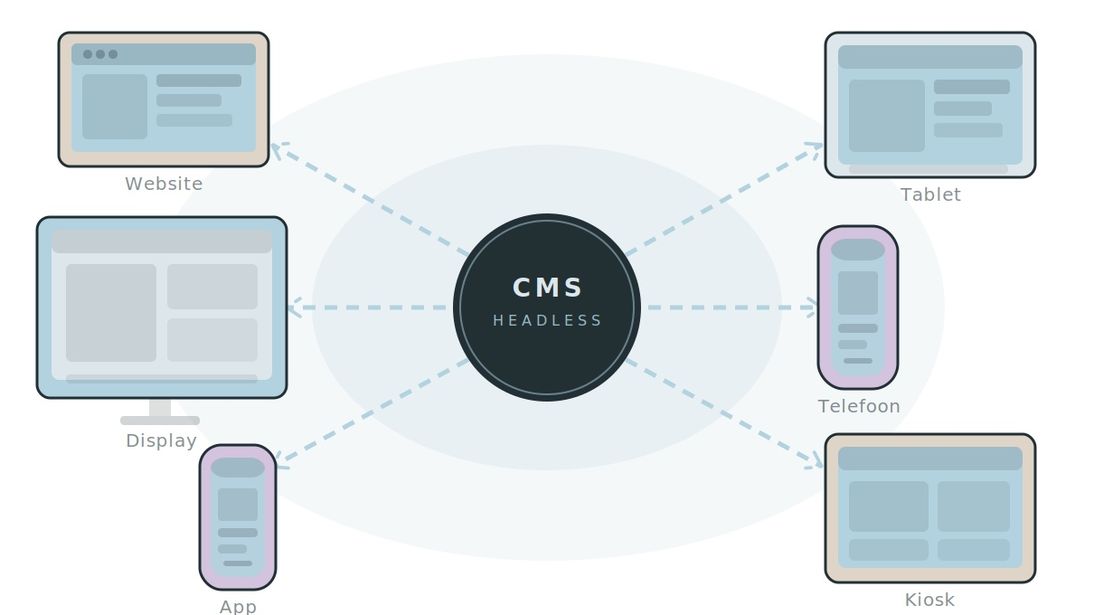
If you’re responsible for a website, a portal, or a digital platform, you’ve probably come across the term “headless CMS” before. And maybe you’ve even asked about it, only to have someone explain what an API is—leaving you no wiser than before.
In this blog, we’ll explain it without the jargon. What is a headless CMS, why are more and more organizations choosing it, and when is it the right choice for your situation?
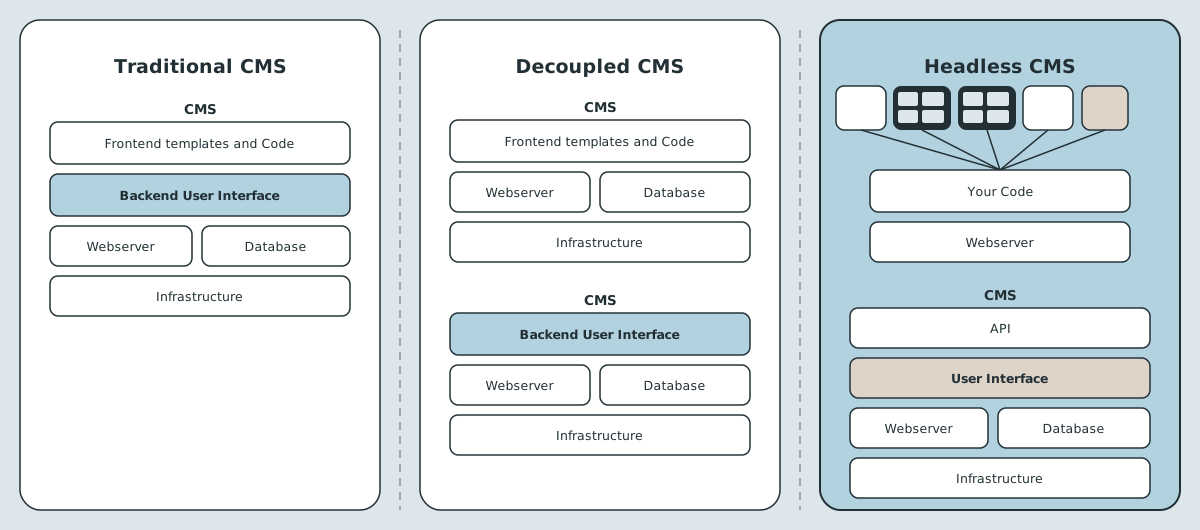
To understand headless, it helps to know what the alternative is. A traditional CMS, such as WordPress or Joomla, is a system in which content and presentation are linked. You write an article, the system determines how it looks, and posts it on your website. Everything is in one package.
That works fine for a simple website. But as soon as you want to display content in multiple places—such as on a website, in an app, on an intranet, and in a digital magazine all at once—that model starts to fall short. You’re dependent on how the system chooses to present the content. Making adjustments is difficult, and every new place where you want to display content requires extra work.
 What is a headless CMS?
A headless CMS does exactly what the name suggests: it lacks a “head.” That head is the front end, the display, the website as the visitor sees it. A headless CMS manages only the content itself, separate from how and where that content is displayed.
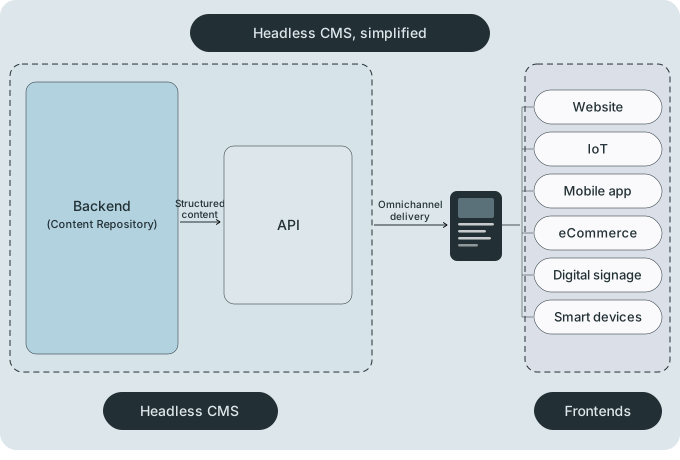
The content you enter—whether it’s text, images, videos, or product information—is stored in a central database. Via a connection—the API—that content can then be displayed anywhere you want: on your website, in a mobile app, on a screen in a store, or in a chatbot. The system doesn’t care where the content goes; it simply delivers the right information at the right time.
 What does a content manager notice?
Virtually nothing, and that’s exactly the point. As an editor or marketer, you work in an admin environment where you enter, edit, and publish content. It feels no different than in a traditional CMS. The difference is on the back end: what you enter can automatically appear in multiple places at once, without you having to do anything extra.
Want to update a product description? You do it in one place, and the update is visible everywhere. Want to add a new page? You can, without needing a developer.
The benefits become most apparent when an organization grows or becomes more complex.
Flexibility in presentation is one of the biggest reasons. Because the content is separate from the presentation, a developer can build the front end of a website or app entirely as they see fit. No limitations from a theme or template. The content adapts to the design, not the other way around.
Speed is a second factor. Headless websites often load faster than traditional CMS websites because they contain less unnecessary code. This has a direct impact on user experience and search engine optimization.
Scalability also plays a role. As an organization manages more content, serves more channels, or attracts more visitors, a headless CMS keeps pace. You don’t have to rebuild from scratch; instead, you expand on a solid foundation.
Finally, there is future-proofing. Technology changes rapidly. A headless CMS makes it easier to update the front end of your platform without having to rebuild the entire content structure from scratch.
For which organizations is it relevant?
A headless CMS isn’t the right choice for everyone. For a simple website with few pages and a single channel, a traditional CMS is often sufficient.
But as soon as you’re dealing with multiple websites, multiple languages, a combination of web and app, or an environment where content is managed by multiple people, a headless CMS begins to prove its value. This applies to media companies, government agencies, educational institutions, membership organizations, and SaaS companies looking to scale their platform.
There are various headless CMS platforms on the market. Two that we use extensively at Smartshore are Strapi and Storyblok.
Strapi is an open-source platform that can be fully self-hosted. This gives organizations maximum control over their data and infrastructure. Smartshore is the only official Strapi partner in the Netherlands, which means we have in-depth knowledge of the platform and work closely with the team behind Strapi.
Storyblok is a cloud-based headless CMS known for its visual editor. Editors can edit content and immediately see how it looks, which lowers the barrier to entry for people who are less technically inclined. Smartshore is also an official Storyblok partner.
Which platform is the best fit depends on the specific situation: the technical environment, the editorial team’s needs, and the requirements for data storage and security.
Choosing a headless CMS is ultimately a strategic decision, not a technical one. It’s about how your organization wants to manage content in the coming years and where you want to deploy that content.
If you find that your current CMS is limiting you, that changes always require a developer, or that it’s difficult to keep content consistent across multiple channels, then it’s worth seriously considering a headless CMS.
Contact us